

Flexible packaging for coffee.
Designed to ensure consistent aroma, freshness and stability throughout the entire shelf life.

Packaging solutions for whole bean coffee, ground coffee, capsules and pods.

Formats from 250 g to 5 kg, compatible with automatic packaging and modified atmosphere (MAP).
If you run or manage a coffee roaster and are looking for a reliable partner for high-performance films, you’re in the right place. With BEPACKS, flexible packaging for coffee becomes an active part of preserving and ensuring the quality of your product.
How flexible packaging protects the aroma and freshness of coffee
Anyone who produces or packages coffee knows it: oxygen, moisture and light are the main factors that compromise aroma and freshness. Inadequate packaging can reduce the perceived quality within the first weeks of shelf life, undermining the work done at the coffee roaster: scientific studies show that after 30 days up to 45% of coffee’s volatile compounds can be lost, with some paper-based solutions reaching aroma losses of over 80%.
For this reason, BEPACKS designs high-barrier flexible films for coffee designed to:
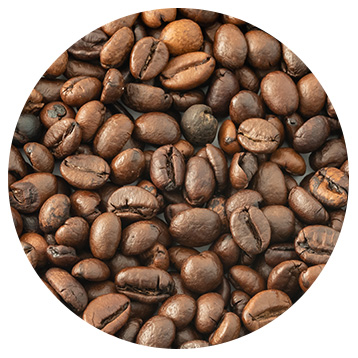
Reduce oxidation processes over time
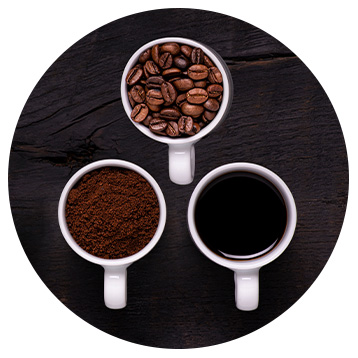
Preserving aroma, taste and organoleptic characteristics
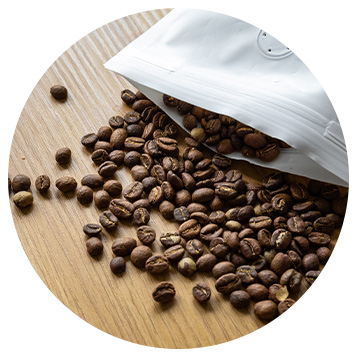
Maintaining quality even after repeated openings
Flexible packaging is not just a container: it is an essential technical component for protecting the value of every coffee bean throughout the entire supply chain.
Find out which film best suits your coffee!
Flexible films for coffee that reduce line stoppages and waste
BEPACKS uses high-performance flexible films, developed to integrate efficiently into industrial coffee packaging processes, without operational issues:

Compatibility with automatic packaging lines

Suitability for modified atmosphere (MAP) processes

On-demand integration of degassing valves
Degassing valves allow the controlled release of carbon dioxide, preventing oxygen ingress and improving the stability of the packaged product, particularly in freshly roasted whole bean coffee.
The result is more stable production management, less waste and greater control over the final quality.
Packaging that communicates quality and strengthens the brand
The flexible film for coffee must not only deliver technical performance: it must also enhance the brand identity and the perception of quality on the shelf.
Our solutions include:
• High-definition flexographic or rotogravure printing
• Food-contact-compliant inks
• High graphic quality and color consistency even on large volumes
Every packaging solution is developed according to brand positioning, the sales channel and the expectations of the end consumer. Would you like to see printing examples for your brand? Request a customized sample.
Reliability of coffee packaging throughout the entire supply chain
The flexible packaging for coffee produced by BEPACKS is designed to ensure reliability throughout the entire supply chain, even in complex industrial conditions:
• Mechanical strength and product protection
• Seal stability over time
• Safety during transport, storage and distribution
In addition to traditional multilayer structures, BEPACKS has also developed recyclable mono-material PP solutions, designed to offer high barrier properties and facilitate recovery within the plastic supply chain. Discover more about this packaging solution.
Why coffee producers choose BEPACKS
as their packaging partner
Specific design for coffee packaging, not generic solutions
Mono-material or multilayer high-barrier structures to preserve aroma and freshness
Compatibility with automatic lines and real industrial processes
Technical support in choosing the most suitable structure for the product and format
Packaging that protects quality and enhances brand identity
Let’s talk about your flexible packaging for coffee!
If you are considering a new partner for your packaging or want to optimize the material performance of your packs, we can start with a technical discussion based on your production and preservation needs. BEPACKS experts respond with concrete, tailored guidance, not standard solutions. Contact us now!

Frequently asked questions about flexible packaging for coffee (FAQ)
Freshly roasted whole bean coffee requires packaging that ensures high protection, capable of:
• Blocking oxygen, moisture, light and external odors, the main causes of oxidation and rancidity;
• Allowing the controlled release of the CO₂ developed during roasting. This function is performed by degassing valves, integrated into the packaging, which allow the gas to escape without letting air in.
For these reasons, the most effective materials are high-barrier composite multilayer films, including:
• PET/AL/PE (polyester + aluminum + polyethylene);
• White BOPP/PE with high-performance barrier layers (for example EVOH);
• BOPP/PP HB/PPC high-barrier mono-material solution.
The degassing valve can be integrated directly on the packaging machine or applied during the preforming stage in the case of preformed pouches.
The choice of film is decisive for product shelf life and for the quality perceived by the consumer. It directly affects:
• Oxidation and rancidity: films with a high oxygen barrier preserve aroma and sensory profiles for longer.
• Aroma loss: materials with a low barrier allow volatile aromas to disperse.
• Moisture protection: inadequate moisture control promotes chemical degradation and mould development.
Yes, it is possible to use the same film, while taking into account the different degassing dynamics.
• Whole bean coffee: requires a high-barrier film and a degassing valve, since the roasted beans continue to release CO₂ for days or weeks.
• Ground coffee: degasses to a lesser extent, but has a much larger surface area exposed to oxygen. In this case too, a high-barrier film is therefore essential.
Pods and capsules have different requirements compared to loose coffee. Pods are made of filter paper, fabric or non-barrier compostable materials, and are generally packaged in high-barrier film since the pod itself offers no protection. Capsules, on the other hand, are made of PP, aluminum or barrier compostable materials and often do not require a very high-barrier outer film, as protection is already ensured by the capsule itself. In many cases, a medium barrier is therefore sufficient.
The most commonly used materials for pods and capsules (single or multipack) are:
• PET/AL/PE (polyester + aluminum + polyethylene);
• BOPP-PE/EVOH/PE (polypropylene + with high-performance barrier layer (EVOH);
• PET-PE/EVOH/PE (polyester + with high-performance barrier layer (EVOH);
• BOPP-PP/EVOH/PP or BOPP/PP HB, high-barrier mono-material solutions.